
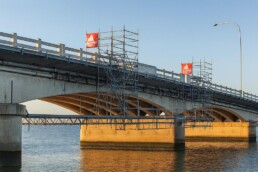
When the Programme Changes, How Fast Should Your Scaffolding Contractor Respond?
When the Programme Changes, How Fast Should Your Scaffolding Contractor Respond?
Construction projects rarely unfold exactly as planned.
A concrete pour overruns. A façade detail changes. An engineer requests additional access. Another contractor falls behind, forcing work to be resequenced. Before long, the scaffold that was perfectly suited to Monday's programme no longer supports Friday's priorities.
This is where the difference between a scaffold supplier and a scaffolding partner becomes obvious.
The question isn't whether site conditions will change. They will.
The real question is whether your scaffolding contractor can respond quickly enough to keep the project moving.
Construction Doesn't Wait for Perfect Conditions
Every experienced site manager understands that construction programmes are living documents.
They evolve as work progresses, clients make decisions, consultants issue revisions and unforeseen challenges emerge. Temporary works need to evolve alongside them.
Scaffolding is no exception.
Whether the requirement is an additional working lift, revised access to a façade, a temporary staircase or an entirely new scaffold configuration, delays in responding can have consequences far beyond the scaffold itself.
A day lost waiting for access can become several days of disruption across multiple trades.
Small Changes Can Have Big Programme Impacts
Not every scaffold modification is a major redesign.
Sometimes it's a relatively simple adjustment that allows another contractor to continue working safely and efficiently.
Examples include:
- Installing an additional working lift.
- Extending scaffold access to a new work area.
- Adding temporary stair access.
- Modifying loading platforms.
- Creating access around newly installed structures.
Although these changes may appear straightforward, they still need to be properly planned, erected and inspected before being handed over for use.
Attempting to shortcut that process introduces unnecessary risk and can create even greater delays later.
The objective isn't simply to respond quickly.
It's to respond quickly while maintaining compliance.
Redesign Shouldn't Mean Starting From Scratch
As projects evolve, scaffold designs sometimes need to evolve with them.
Perhaps the client has instructed additional façade repairs.
Perhaps mechanical services now require access that wasn't included in the original scope.
Perhaps another contractor needs working platforms in an area that wasn't initially planned.
When these situations arise, redesign should be approached as an extension of the original engineering process, not an afterthought.
Any significant modification should continue to satisfy the requirements of SANS 10085 and the project's design intent. Where engineering input is required, it should form part of the modification process before erection proceeds.
The faster those decisions are made, the sooner the programme can recover.
Weekend Work Often Protects the Programme
Not every solution happens during normal working hours.
Many construction projects rely on carefully planned weekend work to avoid disrupting critical activities during the week.
This might involve dismantling one scaffold section while another trade isn't working.
It could mean erecting additional scaffold ahead of Monday morning's programme.
It may even involve completing modifications overnight to minimise disruption to occupied buildings or busy public areas.
A scaffolding contractor's willingness and ability to accommodate these requirements often determines whether programme recovery is possible without affecting downstream activities.
Flexibility is not simply a convenience.
It is a commercial advantage.
Emergency Access Requires Calm, Not Panic
Occasionally, access requirements arise without warning.
Unexpected defects are discovered.
Emergency maintenance becomes necessary.
Weather causes damage that requires immediate attention.
Building owners request urgent inspections.
These situations place pressure on every contractor involved.
While every emergency is different, the response should remain structured. Safe scaffold design, competent erection, inspection and formal handover remain essential regardless of how quickly access is required.
Speed should never come at the expense of safety.
The most effective emergency responses are those built on established systems rather than improvised decisions.
Agility Is About More Than Arriving Quickly
When contractors describe themselves as responsive, many clients think only about mobilisation time.
True agility goes much further.
It includes the ability to:
- Assess changing site conditions quickly.
- Develop practical access solutions.
- Coordinate with multiple contractors.
- Allocate labour efficiently.
- Adapt scaffold designs where required.
- Complete inspections before handover.
- Keep communication flowing throughout the process.
In other words, responsiveness is measured by how efficiently the entire process moves from request to safe working access.
That level of coordination only comes from experience, planning and effective project management.
Good Communication Prevents Small Problems Becoming Large Ones
Scaffold modifications often begin with a simple conversation.
A foreman notices that another trade needs additional clearance.
A project manager identifies a sequencing issue.
An engineer requests revised access.
The earlier those conversations happen, the easier they are to resolve.
Waiting until the affected contractor is already standing idle places unnecessary pressure on everyone involved.
Experienced scaffolding contractors work closely with principal contractors, engineers and site management throughout the project because access requirements rarely remain static.
Regular communication allows potential issues to be identified while solutions are still straightforward.
Compliance Still Matters When the Programme Is Under Pressure
Few projects finish without experiencing programme pressure.
Deadlines tighten.
Milestones move.
Clients push for earlier completion.
This is often when shortcuts become tempting.
Scaffold alterations completed without inspection, undocumented modifications or rushed handovers may appear to save time in the moment, but they introduce unnecessary safety and compliance risks.
SANS 10085 requires scaffolding to be erected, altered and inspected by competent persons before use. Those requirements do not disappear because the programme has become challenging.
Well-managed projects recognise that maintaining compliance is part of protecting the programme, not something separate from it.
The Right Scaffolding Partner Helps Projects Stay Flexible
No contractor can prevent project changes.
What matters is how effectively those changes are managed.
At Alpine Scaffolding, we've built our business around the understanding that construction sites are dynamic environments. Our services extend beyond scaffold hire to include design, supply, erection, inspections, technical scaffolding solutions and specialised access systems, allowing us to support projects as requirements evolve. Our ability to undertake after-hours work, provide ongoing scaffold inspections and develop engineered scaffold solutions reflects the level of flexibility many modern projects demand.
That combination of technical capability and responsiveness allows clients to adjust their programmes without compromising safety or compliance.
The Best Response Is Often the One That Prevents the Delay
The fastest scaffolding contractor isn't necessarily the one who arrives first.
It's the one who anticipates change, communicates early and has the systems, people and technical expertise to respond before minor adjustments become major programme disruptions.
Construction will always involve change. Access requirements will continue to evolve as projects progress.
That's why responsiveness has become one of the most valuable qualities a scaffolding contractor can offer.
At Alpine Scaffolding, we believe agility is every bit as important as technical expertise and safety. Together with our commitment to Service. Agility. Safety., it allows us to support Cape Town's contractors, developers and project teams with scaffold solutions that keep pace with the realities of modern construction.
Contact Us For A Free Quotation (or Any Questions)
Complete the contact form below for any quotes, questions, or enquiries about your project.
Our dedicated team of experts will get back to you promptly.


Why the Cheapest Scaffold Quote Usually Becomes the Most Expensive Project
Why the Cheapest Scaffold Quote Usually Becomes the Most Expensive Project
Every contractor has seen it happen.
Five scaffold quotes land in the inbox. Four are within a reasonable range. One is significantly cheaper.
At first glance, it feels like an easy saving.
But then the project starts.
The scaffold arrives late. The installation takes longer than expected. Trades can't access their work areas. The crane sits idle waiting for the scaffold to be adjusted. Variations start appearing. Deadlines begin slipping.
By the time practical completion arrives, the cheapest quote has become one of the most expensive decisions on the project.
Scaffolding is rarely a major percentage of the overall contract value, but it has an outsized influence on programme, productivity and safety. That's why experienced project managers, quantity surveyors and developers don't evaluate scaffold pricing in isolation. They look at the total cost of delivery.
The Quote Is Only Part of the Cost
A scaffold quotation tells you what you'll pay the contractor.
It doesn't tell you what delays might cost the project.
Every day that scaffold-related work falls behind has a ripple effect across multiple trades. Bricklayers, façade installers, painters, glazing contractors and M&E teams often depend on safe access before they can begin their work.
If that access isn't available when promised, those teams don't simply disappear from the programme.
They wait.
Or they leave site and return later.
Neither option is free.
When several subcontractors lose productive time because scaffold access isn't ready, the financial impact quickly exceeds any saving achieved by selecting the lowest quotation.
Delays Multiply Faster Than Most Budgets Allow
Construction programmes are tightly linked.
One delay creates another.
A scaffold that isn't erected on schedule can prevent façade work from starting. That pushes waterproofing back. Internal finishes are delayed. Practical completion shifts. Contractual milestones become more difficult to achieve.
The scaffold itself may represent a relatively small package within the overall contract, but it often controls access to activities that sit on the project's critical path.
This is where experienced scaffolding contractors distinguish themselves.
Reliable planning, responsive site teams and the ability to adapt to changing programme requirements help keep other contractors productive rather than waiting for access.
That is why agility matters as much as price.
Rework Is Always More Expensive Than Doing It Properly the First Time
Few costs are more frustrating than paying twice for the same work.
Rework can happen for many reasons.
Perhaps the scaffold wasn't erected to suit the sequencing of the project.
Perhaps additional lifts are needed because the original design didn't accommodate changing work fronts.
Perhaps access points interfere with other trades, requiring partial dismantling and re-erection.
None of these situations are unusual on complex construction projects.
The difference lies in how effectively they are anticipated during planning.
Project-specific scaffold design and careful coordination before erection significantly reduce the likelihood of costly changes once construction is underway. Alpine's approach includes technical scaffold design, project planning and engineering expertise that support efficient execution from the outset.
Variation Orders Can Erase Any Initial Saving
Every quantity surveyor understands the importance of comparing like with like.
A low quotation sometimes reflects a reduced scope rather than greater efficiency.
Items that appear unnecessary during tender may become essential once work begins.
Additional scaffold lifts.
Temporary stair access.
Loading platforms.
Weekend work.
Design revisions.
Extended hire periods.
Each variation may be commercially justified, but together they can significantly increase the final cost of the scaffold package.
A comprehensive quotation supported by clear scope definitions often provides better value than a lower price built around assumptions.
Before awarding a contract, ask whether every requirement has genuinely been included.
Crane Time Is Too Valuable to Waste
Tower cranes and mobile cranes are among the most expensive resources on a construction site.
When crane time is booked, every delay has consequences.
If scaffold materials are not ready when scheduled, or installation teams cannot keep pace with the lifting programme, valuable crane hours may be lost.
Likewise, if sections require adjustment after installation, additional crane time may need to be allocated later in the programme.
These indirect costs rarely appear on the scaffold quotation, yet they directly affect the overall project budget.
A well-planned scaffold programme should integrate with the broader construction sequence rather than compete with it.
Downtime Across Multiple Trades Is Difficult to Recover
One delayed scaffold rarely affects only one contractor.
Access scaffolding sits at the centre of many construction activities.
When it falls behind schedule, multiple subcontractors may be forced to delay their work.
This often results in:
- Reduced labour productivity.
- Programme disruption across several trades.
- Additional site management and coordination.
- Difficulty recovering lost time later in the programme.
Even where delays appear minor in isolation, the cumulative effect can be substantial.
Experienced project teams evaluate scaffolding based on its contribution to overall programme certainty, not simply its contract value.
Compliance Problems Create Delays of Their Own
Compliance is sometimes viewed purely as a safety obligation.
In reality, it is also a programme issue.
Scaffolding that does not comply with SANS 10085 or the Occupational Health and Safety Act may require corrective work before it can be used safely. Inspections, alterations or temporary work stoppages all have the potential to affect project progress.
The same applies to documentation.
Inspection records, handover certificates and supporting compliance documentation should be available when required. Producing these after the fact creates unnecessary pressure during audits and site inspections.
Well-managed scaffolding reduces administrative delays as well as physical ones.
Responsiveness Has Real Commercial Value
Construction rarely follows the original programme.
Additional work is instructed.
Sequencing changes.
Weather affects progress.
Clients revise priorities.
When those changes occur, the scaffolding contractor needs to respond quickly.
That responsiveness is difficult to measure during tender evaluation, yet it often determines whether the programme stays on track.
At Alpine, agility forms part of our operating philosophy because we understand that access requirements change throughout the life of a project. Combined with technical expertise, quality control and a commitment to SANS 10085 and OHSACT compliance, responsiveness helps projects maintain momentum when circumstances evolve.
Value Is Measured Over the Life of the Project
The best scaffold contractor is rarely the one with the lowest price.
It's the one that delivers predictable outcomes.
Projects benefit from contractors who:
- Plan thoroughly before arriving on site.
- Deliver safe, compliant scaffold systems.
- Respond quickly when programmes change.
- Minimise disruption to other trades.
- Maintain clear communication throughout the project.
- Support inspections with accurate documentation.
Those qualities reduce uncertainty, improve productivity and help protect project budgets from avoidable costs.
A Better Question Than "Who Is Cheapest?"
When evaluating scaffold tenders, the better question isn't who submitted the lowest quotation.
It's who is most likely to help deliver the project on time, safely and with the fewest unexpected costs.
Scaffolding influences far more than access. It affects programme certainty, subcontractor productivity, crane utilisation, compliance and ultimately the commercial success of the project.
At Alpine Scaffolding, we believe every scaffold should contribute to smoother project delivery through careful planning, technical expertise and dependable execution. That's why our approach is built around three principles that guide every contract: Service. Agility. Safety.
Contact Us For A Free Quotation (or Any Questions)
Complete the contact form below for any quotes, questions, or enquiries about your project.
Our dedicated team of experts will get back to you promptly.

10 Questions Every SHEQ Manager Should Ask Before Signing Off a Scaffold
10 Questions Every SHEQ Manager Should Ask Before Signing Off a Scaffold
A scaffold audit should never become a box-ticking exercise. For a SHEQ Manager, every inspection is an opportunity to identify risk before it becomes an incident, a project delay, or a compliance failure.
On busy construction sites, industrial shutdowns, and maintenance projects across Cape Town, scaffolding is often one of the highest-risk temporary structures on site.
Its condition changes as work progresses, weather shifts, and multiple trades interact with it throughout the day. That is why South Africa's Occupational Health and Safety Act (OHSACT) and SANS 10085 place such strong emphasis on competent design, erection, inspection and ongoing monitoring.
The strongest scaffold audits are driven by questions rather than assumptions.
Here are the questions we believe every SHEQ Manager should be asking.
1. Was the Scaffold Designed for This Specific Application?
No two projects are identical, so the scaffold shouldn't be either.
The first question during any audit should be whether the scaffold has been designed for the work it is expected to perform. Consider the intended loading, working height, access requirements, ground conditions and surrounding environment.
On more complex projects, particularly high-rise developments or exposed coastal sites around Cape Town, wind loading becomes an important design consideration. If the scaffold has been engineered, the supporting calculations and drawings should be available where required.
If the scaffold has evolved significantly since installation, verify that those changes have been assessed rather than simply accepted as part of site progress.
2. Are Competent People Responsible for the Scaffold?
A compliant scaffold starts with competent people.
SANS 10085 places responsibility on competent persons for scaffold erection, inspection and supervision. During your audit, don't assume competence because the scaffold appears well built.
Ask for evidence that the relevant personnel have been appointed for their responsibilities and that inspections have been carried out by authorised individuals.
Competency isn't an administrative exercise. It is one of the strongest safeguards against shortcuts that compromise safety.
3. Has the Scaffold Been Inspected at the Required Intervals?
A scaffold that passed inspection last week may not be safe today.
Temporary works change constantly. Components are adjusted, weather conditions change and multiple contractors interact with the structure throughout the project.
Your audit should confirm that inspections have been completed:
- Before first use
- After any alteration
- After events that could affect stability, such as severe weather
- At the intervals required while the scaffold remains in service
Just as importantly, verify that inspection records are current, complete and readily available. A missing inspection register is as much a compliance concern as a missing component.
4. Has Anything Been Changed Since the Last Inspection?
Unauthorised alterations are one of the quickest ways to compromise scaffold safety.
Ask whether guardrails, braces, ties, platforms or access points have been removed to accommodate another trade. Small changes often appear harmless but can significantly affect structural integrity.
Walk the scaffold with fresh eyes.
If something doesn't match the original configuration, ask who authorised the change and whether it has been re-inspected.
If nobody can answer those questions, the scaffold deserves closer attention before anyone uses it.
5. Is the Scaffold Still Structurally Stable?
Stability should never be assumed because the scaffold has been standing for several weeks.
Check foundations, base plates, sole boards, ties and bracing. Look for signs of movement, settlement or damage. On exposed sites, consider whether recent weather conditions may have affected stability.
Cape Town's coastal winds are a reality that experienced SHEQ Managers cannot ignore. A scaffold that was stable during erection should still be able to demonstrate that stability after weeks of changing site conditions.
The question isn't whether it was stable.
It's whether it remains stable today.
6. Is Safe Access Available at Every Working Level?
Workers should never have to improvise their way onto a scaffold.
During your inspection, verify that designated access routes remain clear and that stair towers, ladders or trapdoor systems are functioning as intended.
Look beyond the scaffold itself.
Are materials obstructing access?
Has housekeeping deteriorated?
Are workers climbing the outside of the structure because it's quicker than using the intended access route?
Unsafe behaviour often points to shortcomings in the scaffold's usability rather than the workforce alone.
7. Is the Scaffold Being Used Within Its Intended Load Capacity?
Scaffolds are designed for specific loads, not unlimited storage.
As projects progress, platforms often become temporary storage areas for materials, equipment and waste. Multiple trades may also begin working from the same scaffold without considering the cumulative loading.
Ask whether the current use still reflects the original design assumptions.
If the nature of the work has changed, the scaffold may require reassessment before work continues.
8. Can the Contractor Produce the Required Documentation Immediately?
Good documentation reflects good control.
During an audit, ask to see the paperwork rather than accepting assurances that it exists.
Depending on the project, this may include design documentation, inspection records, scaffold handover certificates, competency records and any engineering approvals required for the installation.
If these documents cannot be produced without delay, it becomes difficult to demonstrate compliance, even if the scaffold itself appears satisfactory.
Documentation should support the scaffold - not chase it.
9. Have Site Conditions Changed Since the Scaffold Was Erected?
Construction sites rarely look the same from one week to the next.
Excavations deepen.
Concrete pours change access routes.
Heavy equipment moves through work areas.
Additional contractors arrive.
Each of these changes has the potential to introduce new risks to an existing scaffold.
A thorough audit considers today's site conditions, not the conditions that existed on the day the scaffold was erected.
10. If an External Auditor Arrived Today, Would This Scaffold Pass?
This is often the most valuable question of all.
Imagine an inspector, principal contractor or client representative arriving on site without notice.
Would the scaffold demonstrate compliance through both its physical condition and its supporting documentation?
Could every inspection be explained?
Could every alteration be justified?
Could every record be produced?
If the answer to any of those questions is uncertain, further investigation is warranted before work proceeds.
Good Scaffold Audits Prevent Problems Before They Exist
The best SHEQ Managers don't treat scaffold audits as routine inspections. They treat them as opportunities to verify that the systems protecting workers remain effective throughout the life of the project.
A scaffold can look well erected while hiding documentation gaps, unauthorised alterations or changes in site conditions that increase risk. Asking the right questions helps uncover those issues before they lead to incidents, delays or regulatory action.
The same principle applies when selecting a scaffolding contractor. A contractor that prioritises sound design, competent erection, structured inspections and compliance with SANS 10085 and OHSACT makes every audit more straightforward because the evidence is already there.
That's the standard every SHEQ Manager should expect from a scaffolding partner - and it's the standard Alpine Scaffolding is committed to delivering through Service. Agility. Safety.
Contact Us For A Free Quotation (or Any Questions)
Complete the contact form below for any quotes, questions, or enquiries about your project.
Our dedicated team of experts will get back to you promptly.

Designing for Cape Town's Wind (And What Every Project Team Should Know About Temporary Event Structures)
Designing for Cape Town's Wind (And What Every Project Team Should Know About Temporary Event Structures)
Anyone who has worked on a construction site or major event in Cape Town knows one thing.
The wind doesn't negotiate.
Whether you're erecting a viewing platform for a sporting event, a temporary stage, a public access staircase, or a large scaffold structure around a building, wind loading isn't simply another design consideration. It's one of the primary factors that determines whether a temporary structure performs safely throughout its service life.
For project managers, event organisers and contractors, understanding how wind affects temporary structures can prevent costly delays, minimise risk, and ensure compliance with South African safety standards.
At Alpine Scaffolding, we've designed and installed temporary access and event structures across the Western Cape. That experience has taught us that successful projects begin long before the first scaffold component arrives on site.
Why Cape Town Demands a Different Approach
Few South African cities experience wind conditions quite like Cape Town.
Strong south-easterly winds during summer, winter cold fronts, exposed coastal developments and open public spaces all create environments where temporary structures are subjected to significant lateral forces.
Unlike permanent buildings, scaffolding and temporary event structures are lightweight by design. They are intended to be assembled, used and dismantled efficiently, which means their stability depends on correct engineering, appropriate bracing, secure tying and sound installation practices.
Even relatively modest increases in wind speed can significantly increase the forces acting on scaffold sheeting, banners, stage roofing, advertising structures and elevated platforms.
Ignoring those forces simply isn't an option.
Wind Loads Are More Than Just the Weather Forecast
One common misconception is that wind management starts when bad weather is predicted.
In reality, it starts during the design phase.
When engineers calculate wind loading, they consider far more than expected wind speed. Factors that influence the design include:
- The height of the structure
- Its location and surrounding exposure
- The shape and surface area exposed to wind
- Temporary cladding, shade netting or signage
- The intended loading of the scaffold or platform
- Ground conditions and available anchoring points
Each project presents a different combination of these variables.
A scaffold erected between surrounding buildings behaves differently to one installed along an exposed coastline or elevated rooftop.
That's why standard solutions don't always produce safe outcomes.
When Is Wind Engineering Required?
Not every scaffold requires detailed wind engineering.
Standard access scaffolds erected within established design parameters may not require project-specific engineering calculations, provided they comply with recognised scaffold standards and manufacturer requirements.
However, more complex projects often demand additional engineering input.
Examples include:
- High-rise access scaffolding
- Temporary stages and event structures
- Public viewing platforms
- Temporary pedestrian bridges
- Large loading platforms
- Structures carrying advertising panels or screening
- Specialised scaffolds with unusual geometry
- Coastal projects exposed to significant wind
These situations frequently require project-specific design calculations to confirm stability under anticipated loading conditions.
At Alpine, wind load calculations form part of our technical scaffolding capability where project complexity demands it. That upfront planning helps ensure structures are designed for the environment they'll actually operate in rather than relying on assumptions.
Temporary Event Structures Face Unique Challenges
Construction sites are generally controlled environments.
Public events are not.
Temporary event structures often need to accommodate changing crowd movements, temporary equipment, lighting, sound systems, large display screens and varying operational requirements over relatively short periods.
Many also remain exposed around the clock.
An event may only run for a weekend, but the structure could stand for several days before and after the event while installation and dismantling take place.
This increases the importance of careful planning.
Temporary stages, viewing platforms, commentary towers and public access staircases all require consideration of both structural performance and public safety throughout their entire operational period.
Risk Management Doesn't Stop After Installation
One of the biggest misconceptions surrounding temporary structures is that the project is complete once erection has finished.
In reality, installation marks the beginning of the operational phase.
Good risk management continues throughout the life of the scaffold.
This includes ongoing inspections, monitoring changing site conditions, managing any modifications to the structure and responding appropriately to severe weather where necessary.
SANS 10085 places significant emphasis on scaffold inspection and ongoing safety management. Regular inspections before use and after events that could affect scaffold stability form part of maintaining a safe working environment throughout the project.
This disciplined approach reduces the likelihood of problems developing unnoticed during the hire period.
Why the Scaffold System Matters
Engineering is only one part of the equation.
The scaffold system itself also influences how efficiently complex structures can be designed and erected.
For technical projects, Alpine makes use of Layher system scaffolding on applications where its versatility offers clear advantages.
Layher's modular connection system allows engineers and scaffold designers to accommodate complex geometries that are common on industrial facilities, event structures and architecturally challenging buildings.
Its fully galvanised components also make it well suited to demanding coastal and industrial environments where durability is an important consideration.
The ability to create adaptable layouts while maintaining structural integrity makes Layher particularly effective for projects involving curved structures, irregular loading requirements and specialised access solutions.
Choosing the right scaffold system doesn't remove the need for engineering.
It gives the engineering team greater flexibility to develop practical, compliant solutions.
Planning Reduces Programme Risk
Wind-related delays can affect far more than scaffold installation.
They influence every contractor working from that scaffold.
Painting, façade restoration, glazing, maintenance, inspections, signage installation and mechanical work can all be affected if access structures aren't available when scheduled.
That's why we place significant emphasis on planning before mobilisation.
By assessing project requirements early, reviewing environmental conditions, undertaking design where necessary and coordinating closely with clients, we help minimise disruption during installation and throughout the project lifecycle.
For project managers, that translates into something every construction programme values.
Predictability.
Experience Matters When Conditions Become Challenging
Temporary structures often attract attention because they're highly visible.
What usually goes unnoticed is the amount of engineering, planning and quality control behind them.
Every successful scaffold represents hundreds of decisions about loading, stability, sequencing, safety, inspections and compliance.
Those decisions become even more important in Cape Town, where coastal exposure and seasonal wind conditions demand a higher level of technical consideration than many inland projects.
At Alpine Scaffolding, we combine technical scaffold design, experienced installation teams and rigorous safety processes to deliver temporary structures that perform under real site conditions. Our approach is guided by recognised South African standards, informed by practical experience, and supported by quality systems that prioritise service, agility and safety.
Whether we're delivering a temporary event platform, a specialised access scaffold or a technically engineered solution for a complex construction project, the objective remains the same: provide safe, reliable access that allows our clients to focus on delivering their own projects with confidence.
Contact Us For A Free Quotation (or Any Questions)
Complete the contact form below for any quotes, questions, or enquiries about your project.
Our dedicated team of experts will get back to you promptly.
Two Scaffolding Quotes. Two Very Different Outcomes. Here's What to Compare Before You Award the Contract.
Two Scaffolding Quotes. Two Very Different Outcomes. Here's What to Compare Before You Award the Contract.
It's a familiar scenario.
Two scaffolding quotations land in your inbox. The scope appears similar. The drawings look comparable. One price is noticeably lower.
The temptation is obvious.
But experienced project managers know that scaffolding quotations rarely tell the full story. The real differences often only become apparent once the project is underway, when unexpected costs, programme delays and scope disputes begin to surface.
The cheapest quotation isn't necessarily poor value, and the highest price doesn't automatically represent better quality. The objective is to understand exactly what you're buying before you appoint a contractor.
Here's where the meaningful differences usually lie.
Start With the Scope, Not the Price
Before comparing totals, make sure you're comparing the same scope of work.
Some quotations include everything required to deliver a complete scaffolding solution. Others price only the basic installation, leaving several essential items to become variations later.
A professional quotation should clearly explain what is included, what is excluded and where assumptions have been made.
If important details are vague or missing altogether, ask for clarification before making any decision.
Ambiguity at tender stage often becomes additional cost during construction.
Is Scaffold Design Included?
Not every scaffold requires an engineer-designed solution.
However, many commercial, industrial and high-rise projects involve access requirements that extend beyond standard scaffold configurations. Loading platforms, temporary staircases, suspended scaffolds, specialised access structures and scaffolds exposed to significant wind loads may all require additional engineering input.
One quotation may include this design work from the outset.
Another may treat it as a variation once the project begins.
Ask whether the quotation includes:
- Scaffold design where required
- Engineer-approved drawings
- Structural calculations where applicable
- Revisions if site conditions change
Clarifying this upfront avoids unexpected costs later and helps ensure the scaffold has been designed specifically for your project rather than adapted during installation.
What Inspection Services Are Included?
Scaffolding doesn't stop being managed once it's erected.
South African legislation and recognised industry practice require scaffolds to be inspected before use and at appropriate intervals during their service life, as well as after events that could affect their safety, such as alterations or severe weather.
Not every quotation includes the same level of inspection support.
Some contractors include scheduled inspections throughout the hire period.
Others may price only the initial erection, leaving ongoing inspections to be arranged separately.
For project managers and SHEQ teams, understanding these responsibilities before work begins helps prevent unnecessary confusion during the contract.
Transport Can Significantly Affect Overall Cost
Transport is another area where quotations differ considerably.
Does the quoted price include delivery and collection?
Are return trips included if scaffold modifications are required?
What happens if the project programme changes and additional deliveries become necessary?
Cape Town projects often involve restricted CBD access, coastal sites or developments where logistics require careful coordination.
Transport should form part of the overall discussion rather than appearing as an unexpected addition once work has started.
Ask How Programme Changes Are Managed
Construction projects rarely follow the original programme without adjustment.
Concrete pours move.
Trades finish early.
Design changes happen.
Access requirements evolve throughout the contract.
That's why it's worth understanding how your scaffolding contractor manages programme changes before appointing them.
Can additional scaffold sections be installed quickly?
How are modifications priced?
Is there sufficient operational capacity to respond if the programme accelerates?
Responsiveness isn't always visible on a quotation, but it often determines whether access becomes a bottleneck or remains an enabler throughout the project.
Why the Scaffold System Matters
Engineering is only one part of the equation.
The scaffold system itself also influences how efficiently complex structures can be designed and erected.
For technical projects, Alpine makes use of Layher system scaffolding on applications where its versatility offers clear advantages.
Layher's modular connection system allows engineers and scaffold designers to accommodate complex geometries that are common on industrial facilities, event structures and architecturally challenging buildings.
Its fully galvanised components also make it well suited to demanding coastal and industrial environments where durability is an important consideration.
The ability to create adaptable layouts while maintaining structural integrity makes Layher particularly effective for projects involving curved structures, irregular loading requirements and specialised access solutions.
Choosing the right scaffold system doesn't remove the need for engineering.
It gives the engineering team greater flexibility to develop practical, compliant solutions.
Understand the Contractor's Standby Capability
Sometimes scaffolding work cannot wait for the next scheduled visit.
Unexpected access requirements, emergency maintenance or programme recovery efforts may require rapid mobilisation.
While standby arrangements vary between contractors and projects, it's worth discussing how urgent requests are handled.
Questions worth asking include:
- Are emergency call-outs available?
- Can additional crews be mobilised if required?
- How are urgent modifications managed?
- Are after-hours or weekend works available where necessary?
These capabilities may never be needed.
But when they are, they can make a significant difference to programme recovery.
Weather Matters in Cape Town
Few South African cities present the environmental challenges that Cape Town does.
Strong seasonal winds, particularly along the coast and on high-rise developments, can affect scaffold planning, erection schedules and ongoing inspections.
Professional contractors account for these realities during planning rather than treating weather as an unexpected obstacle.
Where projects require it, this may include wind-load assessments, engineered scaffold designs and clear procedures for responding to changing site conditions.
When reviewing quotations, ask how weather-related delays and site conditions are managed contractually.
Understanding those expectations before work starts helps avoid disagreements later.
Who Will Actually Be Building the Scaffold?
One of the most overlooked questions has nothing to do with equipment.
It concerns the people erecting it.
Scaffolding should be erected, altered and inspected by competent personnel in accordance with South African legislation and the requirements of SANS 10085.
A quotation should give you confidence that the contractor has appropriately trained crews, experienced supervision and structured safety management in place.
Technical expertise isn't something that appears as a separate line item.
It's reflected in how consistently the project is delivered.
Communication Is Part of the Service
Price is easy to compare.
Service is more difficult.
Will the contractor attend coordination meetings when required?
Can they respond promptly to design queries?
Are inspection records organised and readily available?
Will you have a dedicated point of contact throughout the project?
These operational details rarely appear in a bill of quantities, yet they often determine how smoothly the project progresses.
Good communication reduces uncertainty, speeds up decision-making and helps multiple contractors work together more effectively.
The Lowest Price Isn't Always the Lowest Cost
Most experienced contractors have seen it happen.
A quotation that appears competitive at tender stage becomes significantly more expensive once additional engineering, transport, inspections or scaffold modifications are added throughout the project.
The original saving disappears.
The programme suffers.
Relationships become strained.
A well-prepared quotation should allow project teams to understand the full scope of the contractor's service before work begins, reducing the likelihood of unexpected costs and avoidable disputes later.
At Alpine Scaffolding, we believe transparency is just as important as technical capability. Our quotations are supported by practical planning, engineered solutions where required, ongoing inspections and a commitment to delivering safe, compliant access solutions that keep projects moving.
Whether we're supporting a commercial development, industrial maintenance project or complex façade installation, our approach remains the same: Service. Agility. Safety.
When you're comparing scaffolding quotations, don't simply ask which contractor is cheaper. Ask which contractor gives your project the greatest certainty from the first day on site to the final dismantle.
Contact Us For A Free Quotation (or Any Questions)
Complete the contact form below for any quotes, questions, or enquiries about your project.
Our dedicated team of experts will get back to you promptly.
The Scaffolding Documentation Every Professional Contractor Should Have Ready Before Work Starts
The Scaffolding Documentation Every Professional Contractor Should Have Ready Before Work Starts
A well-planned scaffolding project doesn't begin when the first standards arrive on site. It begins with documentation.
For project managers and SHEQ professionals, paperwork isn't simply an administrative exercise. It's evidence that the scaffolding contractor has planned the work properly, identified the risks, appointed competent people and established a system for keeping the scaffold safe throughout the project.
When these documents are missing, incomplete or only produced after work has started, it's often a warning sign that the planning behind the scaffold may be just as weak.
Before any scaffold is erected, here's the documentation you should expect from a professional scaffolding contractor.
Start with a Comprehensive Method Statement
The method statement explains how the scaffolding contractor intends to complete the work safely and efficiently.
Rather than being a generic document copied from a previous project, it should reflect the specific site, access constraints, programme requirements and scope of work.
Depending on the project, it may cover the sequence of erection, material handling, exclusion zones, interaction with other contractors, emergency procedures and how the scaffold will eventually be dismantled.
For project teams, the method statement becomes an important planning document. It allows everyone involved to understand how the work will be carried out before activities begin on site.
If the contractor cannot clearly explain their process on paper, it becomes difficult to have confidence in the execution.
A Risk Assessment Should Be Site-Specific
Every construction site presents different hazards.
A high-rise development in the Cape Town CBD has different risks from an industrial shutdown, a heritage restoration or a commercial maintenance project. Coastal conditions, public interfaces, restricted access and live operational environments all influence how scaffolding should be planned.
That's why the risk assessment should always be specific to the project.
It should identify the hazards associated with the scaffolding activities, assess the potential risks and outline the control measures that will be implemented to reduce them.
The objective isn't to eliminate every possible risk. Construction doesn't work that way.
The objective is to demonstrate that foreseeable risks have been considered before work starts.
Engineered Scaffold Designs Where They're Required
Not every scaffold requires a bespoke engineered design.
However, where the scaffold falls outside standard configurations, carries unusual loads or presents increased complexity, professional design becomes essential.
This is particularly relevant for specialised access scaffolds, loading platforms, suspended scaffolds, temporary staircases and structures exposed to significant wind loading.
A properly engineered scaffold design gives the project team confidence that the proposed solution has been developed for its intended application rather than adapted during erection.
At Alpine, scaffold design forms part of our planning process on technically demanding projects. Our experience in scaffold engineering, wind-load assessments and specialised access solutions allows us to resolve complex access challenges before installation begins, reducing uncertainty once work is underway.
Competency Matters More Than Job Titles
Scaffolding is a specialised discipline.
South Africa's Occupational Health and Safety Act places clear responsibilities on employers regarding competent persons, while SANS 10085 establishes requirements for the design, erection, inspection and dismantling of scaffolding.
Before work begins, project teams should be satisfied that the individuals carrying out the work are appropriately trained, competent and formally appointed for their responsibilities.
Depending on the project, documentation may include competency records, appointment letters or evidence of relevant training.
The important point is not simply that certificates exist.
It's that the contractor can demonstrate a structured approach to competence throughout the project.
Inspection Procedures Should Already Be Planned
Professional scaffolding contractors don't wait until the scaffold is complete before thinking about inspections.
Inspection forms, reporting procedures and scheduled inspections should already form part of the project documentation before erection begins.
Scaffolding must be inspected before first use and thereafter at intervals required by legislation and site procedures, as well as after any event that may affect its structural integrity, such as alterations or severe weather.
For SHEQ managers, these inspection records become part of the site's overall compliance system.
They also provide confidence that scaffold safety is being actively managed rather than assumed.
Scaffold Handover Is a Critical Milestone
One of the most important documents on any scaffolding project is the scaffold handover certificate.
This document records that the scaffold has been erected, inspected and made available for its intended use.
Until that formal handover has taken place, project teams should avoid treating the scaffold as operational.
Likewise, if significant modifications are made after handover, further inspection and updated documentation may be required before the scaffold is returned to service.
Handover documentation creates a clear point of accountability between the scaffolding contractor and the client.
Don't Overlook Supporting Documentation
The primary documentation often receives the most attention, but several supporting records also contribute to safe project delivery.
Depending on the contract, these may include:
- Method statements
- Site-specific risk assessments
- Engineer-approved scaffold designs where required
- Competency and appointment records
- Scaffold handover certificates
- Inspection registers
- Relevant health and safety documentation required by the principal contractor
When these documents are organised and readily available, audits become simpler, project coordination improves and unnecessary delays are far less likely.
Good Documentation Reflects Good Project Management
Experienced project managers quickly recognise that paperwork usually reflects the quality of the contractor behind it.
Well-prepared documentation suggests that planning has been completed, responsibilities are clearly understood and safety systems are already in place before work starts.
Disorganised documentation often points to reactive management, where issues are addressed only after they become problems on site.
While documentation alone doesn't guarantee successful delivery, it provides valuable insight into how the contractor approaches the project as a whole.
Choosing a Scaffolding Partner Who Makes Compliance Easier
Managing construction projects already involves coordinating multiple contractors, changing programmes and demanding safety requirements.
Your scaffolding contractor should simplify that process, not add to it.
At Alpine Scaffolding, documentation forms part of our project delivery from day one. We provide the technical planning, scaffold design, inspections and compliance support required to help contractors meet their obligations under South African legislation while keeping projects moving safely and efficiently.
Our approach is built on three principles that guide every project we undertake: Service. Agility. Safety.
For project managers, engineers and SHEQ professionals across Cape Town, that means fewer surprises, clearer accountability and confidence that the scaffolding supporting the project has been planned just as carefully as the construction itself.
Contact Us For A Free Quotation (or Any Questions)
Complete the contact form below for any quotes, questions, or enquiries about your project.
Our dedicated team of experts will get back to you promptly.
Can Your Scaffolding Contractor Keep Your Project on Programme?
Can Your Scaffolding Contractor Keep Your Project on Programme?
On a construction project, delays rarely come from a single dramatic failure. More often, they build quietly. A late delivery. An incomplete scaffold. A design revision that should have happened weeks earlier. An inspection that wasn't scheduled. Before long, multiple trades are waiting for access, and the programme starts slipping.
Scaffolding sits at the centre of many construction activities. Brickwork, façade installation, concrete repairs, waterproofing, glazing, painting and maintenance all depend on safe, reliable access. When scaffolding falls behind, the rest of the project usually follows.
Choosing a scaffolding contractor isn't simply about comparing prices. It's about selecting a partner with the technical capability, planning processes and operational discipline to keep your programme moving from the first installation to final dismantling.
Here are the indicators experienced project managers look for before making that decision.
They Ask About Your Programme Before Talking About Price
One of the first signs of a professional scaffolding contractor is the quality of the questions they ask.
Rather than immediately preparing a quotation, they should be looking to understand how scaffolding fits into the overall construction sequence.
Questions might include:
- Which trades require scaffold access first?
- Are there phased handovers?
- Will sections need to be modified as construction progresses?
- Are there tower crane or logistics constraints?
- Are weekend or after-hours installations required?
- What are the critical programme milestones?
Scaffolding is temporary works. By definition, it needs to evolve with the project.
A contractor who understands your programme from the outset is far more likely to anticipate changes than react to them after they become delays.
Design Should Start Before Materials Arrive
On complex projects, scaffold design should never be treated as an afterthought.
Every site presents different challenges, whether that's restricted access in the Cape Town CBD, exposed coastal conditions, unusual building geometry or high loading requirements.
Professional scaffold contractors produce designs before erection begins, ensuring the system has been engineered for its intended use and site conditions. Where required, this includes structural calculations and engineer-approved drawings.
This planning stage often prevents costly redesigns once construction is already underway.
It also gives project teams confidence that the scaffold has been developed specifically for the work being carried out rather than adapted on site.
They Have the Capacity to Respond When the Programme Changes
Construction programmes are living documents.
Concrete pours move. Deliveries are delayed. Clients request design changes. Trades finish earlier than expected. Access requirements shift throughout the life of a project.
The real test of a scaffolding contractor isn't whether everything goes according to plan. It's how quickly they respond when it doesn't.
Can they mobilise additional crews if required?
Can scaffold sections be modified without disrupting adjacent work?
Can they safely accommodate changes to access requirements as the project develops?
Responsiveness has a direct impact on productivity.
When access changes take days instead of weeks, multiple trades can continue working without unnecessary interruption.
Compliance Should Never Slow a Project Down
Some contractors see safety compliance as an administrative burden.
Professional contractors understand that proper compliance protects the programme.
In South Africa, scaffolding must comply with the Occupational Health and Safety Act and the relevant requirements of SANS 10085. These standards establish expectations around scaffold design, erection, inspection and ongoing safety management.
When inspections are planned, documentation is organised and competent personnel are carrying out the work, projects avoid unnecessary stoppages caused by failed audits or unsafe access.
Compliance isn't something that happens separately from delivery.
It is part of delivering on time.
Look Beyond the Number on the Quotation
Two quotations may appear similar while offering very different levels of service.
Before making a decision, project teams should understand exactly what is included.
Consider whether the quotation clearly covers:
- Scaffold design and engineering where required
- Transport, erection and dismantling
- Scheduled inspections throughout the hire period
- Scaffold modifications as the project progresses
- Handover documentation and compliance records
- Project management and site supervision
A lower price often reflects a reduced scope rather than greater efficiency.
Clarifying these details before appointing a contractor helps prevent disputes, unexpected variation claims and programme interruptions later.
Their Inspection Process Is Already Built Into Their Operations
A scaffold is not simply erected and forgotten.
It requires ongoing inspections throughout its service life to confirm it remains safe for continued use, particularly after alterations or environmental conditions that could affect stability.
An experienced contractor will have inspection procedures integrated into their normal operations rather than treating them as reactive tasks.
That means inspections are planned, documented and completed by competent personnel, giving project teams confidence that safe access remains available throughout the contract.
For site managers and SHEQ professionals, this consistency removes unnecessary uncertainty.
They Understand Cape Town's Site Challenges
Every construction market has its own realities.
Cape Town projects often involve constrained urban sites, exposed coastal environments and increasingly complex developments where multiple contractors work simultaneously.
Strong seasonal winds can influence scaffold planning. Limited access may require carefully sequenced installations. Public interfaces often demand additional protection measures.
A contractor with local experience understands these conditions before arriving on site.
That knowledge helps avoid delays that might not be obvious during tender stage but become significant once construction begins.
Communication Is Fast, Clear and Practical
Programme delays are often communication failures before they become construction failures.
Project managers should never have to chase their scaffolding contractor for updates, inspection records or revised installation dates.
Good contractors communicate proactively.
If weather affects planned work, they advise the team early.
If design changes require additional engineering, they explain the implications.
If modifications are needed, they coordinate with the project team before other trades are affected.
Clear communication reduces uncertainty, allowing site teams to plan with confidence.
Experience Shows in the Way Problems Are Managed
Every project encounters challenges.
The difference lies in how quickly they're identified and resolved.
Experienced scaffolding contractors recognise potential issues early because they've seen similar situations before. Whether it's an access conflict, a sequencing problem or a design adjustment, practical experience allows solutions to be implemented before they affect the wider programme.
That level of foresight cannot be replaced by equipment alone.
It comes from combining technical expertise with disciplined project management.
Reliable Scaffolding Supports Reliable Construction
The best scaffolding contractor is rarely the one making the biggest promises.
It's the contractor whose planning, engineering, inspections and communication allow everyone else on site to do their jobs without interruption.
At Alpine Scaffolding, our approach is built around three principles: Service. Agility. Safety.
From engineered scaffold designs and ongoing inspections to responsive project support and full compliance with SANS 10085 and the Occupational Health and Safety Act, our focus is simple: providing access solutions that help Cape Town construction projects stay safe, productive and on programme.
Because when scaffolding is planned properly, delivered professionally and managed throughout the project, it becomes exactly what it should be - a dependable part of the construction process, not the reason your programme falls behind.
Contact Us For A Free Quotation (or Any Questions)
Complete the contact form below for any quotes, questions, or enquiries about your project.
Our dedicated team of experts will get back to you promptly.

Layher Spectator Seating - The System Behind the World's Best Temporary Grandstands
Layher Spectator Seating - The System Behind the World's Best Temporary Grandstands
When Paris hosted the 2024 Olympic Games, the temporary venues that defined the event were built on hundreds of thousands of scaffolding components from Layher, the world's largest manufacturer of system scaffolding.
The same system has carried harbourside opera audiences in Sydney and motorsport crowds across Australia. Wherever a serious event needs a serious temporary structure, Layher's Allround system is usually part of the conversation.
For South African event organisers, that matters for a simple reason. The same engineering trusted at the biggest events in the world is available here, scaled to whatever you're planning, whether that's a school gala, a club rugby final or a festival main arena.
This is a guide to what Layher spectator seating is, what it does better than the alternatives, and what it means for the way you plan your event.
One System, Engineered for Crowds
At the heart of Layher's Allround system is the rosette: a steel connector fixed to every vertical post, into which horizontal and diagonal components lock with a hammered wedge. No loose bolts, no improvised fittings, no guesswork at the joint. Every connection is positive, repeatable and inspectable.
For spectator seating, that node does something powerful. It lets a trained crew build a raked, tiered grandstand from standard components: stepped frames rising row by row, decks and seating units, continuous guardrails, kickboards and dedicated stair towers.
The structure is hot-dip galvanised steel, paired with weatherproof deck and seating components, built to perform in conditions that punish lesser materials.
The result reads less like scaffolding and more like permanent infrastructure. Clean lines, uniform finish, solid underfoot. Your spectators experience a grandstand. We see a precisely engineered structure with a calculation behind every member.
Why Organisers Choose It
The case for Layher seating comes down to outcomes, and they're the outcomes event organisers care about most.
Speed is the first. Wedge connections assemble dramatically faster than conventional tube-and-fitting scaffolding, which compresses your build window and, just as importantly, your strike. When a venue gives you access on Thursday and wants its field back on Monday, that speed is the difference between a comfortable programme and an all-night scramble.
Flexibility is the second. Because the system is modular, capacity, rake, row depth and access points are design variables rather than fixed products. The same inventory configures into a three-tier stand for an interschools athletics day, a 500-seat grandstand with VIP deck for a final, or camera platforms and commentary positions for broadcast. You define the crowd and the sightlines; the system adapts.
Then there's the one that should sit above everything else: structural confidence. A grandstand carries live, moving, celebrating crowds. Layher's components are manufactured to tight tolerances with documented load data, which means the stand you book can be properly engineered for crowd loading, ground conditions and wind exposure, and signed off with real numbers behind it. That's not a luxury. With people on a raked structure, it's the entire point.
Compliance Becomes Simpler, Not Harder
South African law treats a temporary grandstand as exactly what it is: a structure carrying the public. The Occupational Health and Safety Act and the Construction Regulations govern its erection, inspection and use, with SANS 10085-1 setting the standard for scaffold work.
On the events side, the Safety at Sports and Recreational Events Act places duties squarely on organisers, and its regulations explicitly cover temporary grandstands, including their structure, seating, gangways, stairwells and access points.
SANS 10366 frames health and safety requirements for event management, and erecting a temporary structure at a certified venue requires written approval.
For high-risk events, safety certificate applications must go in well in advance, so seating decisions belong early in your planning, not the final fortnight.
Here's where a proven system earns its keep. Because Layher components are standardised and their performance documented, the design, inspection and certification process is cleaner from end to end.
A properly run seating project hands you a paper trail your safety officer can sign off without hesitation:
- An engineered design matched to your crowd numbers, site and wind exposure.
- Erection by trained crews, followed by inspection and a handover certificate before the first spectator climbs a stair.
That documentation isn't admin for its own sake. It's what protects you, your venue and your event the moment anything is questioned.
Built for Western Cape Conditions
Cape Town events come with conditions worth designing for, and this is where local expertise meets global engineering.
The south-easter shapes everything. A raked grandstand presents a large face to summer gusts, and wind loading rightly drives the bracing, the ties and sometimes the orientation of the structure itself.
Coastal air is the second factor, and galvanised steel handles it without complaint, event after event, season after season. The third is terrain. School fields, wine farms and waterfront sites are rarely level, and the system's adjustable bases quietly absorb slopes and soft ground that would defeat a less capable structure.
We design, erect and inspect scaffold structures in these conditions every week. Pairing that local knowledge with the Layher system means a stand that isn't just compliant on paper but rock solid with a full crowd on it and the wind up.
Planning Your Seating: Where to Start
The conversation is simpler than most organisers expect. Tell us how many spectators you need seated, what the ground is like, how close vehicles can get to the build position, and what your install and strike windows look like around the event programme.
Even rough answers let us turn your requirement into a configuration, a price and a build schedule quickly.
If you're comparing options, ask every supplier the same three questions: what system is the stand built on, who engineers and certifies it, and what does the inspection handover look like? The answers will separate the professionals fast.
Temporary seating is one of the few elements of an event your audience physically trusts with their safety for hours at a time.
Build it on the system the world's biggest events rely on, backed by local engineering, inspection and certification, and the grandstand becomes the most dependable part of your plan rather than the part that keeps you up at night.
That's the standard we hold every structure to, and it's the conversation we'd welcome ahead of your next event.
Contact Us For A Free Quotation (or Any Questions)
Complete the contact form below for any quotes, questions, or enquiries about your project.
Our dedicated team of experts will get back to you promptly.

Modular Grandstands for Sporting Events - Big Capacity Without the Permanent Commitment
Modular Grandstands for Sporting Events - Big Capacity Without the Permanent Commitment
Every sporting venue has the same maths problem. The fixtures that matter draw crowds the venue was never built to hold, and they arrive a handful of times a year. A derby, a final, a provincial tournament, a one-off international.
Build permanent stands for those peaks and you've sunk capital into concrete that sits empty 350 days a year. Don't build them, and you're turning away spectators, sponsors and ticket revenue.
Modular seating exists to solve exactly that problem, and sporting events are where it makes the strongest case for itself.
Capacity That Matches the Fixture, Not the Average
A modular grandstand is built from engineered scaffold components: vertical standards, ledgers and braces forming a stepped substructure, with decks, seating units, guardrails and stair towers completing the stand. Because nothing is welded, cast or fixed, the structure is a configuration, not a product.
That changes how you think about capacity. A school can seat a few hundred parents along the main field for athletics day. A club can add a thousand seats for a knockout final. A tournament can wrap raked seating around a finish line, then shift it to the prize-giving the following week. Same components, different answers.
For the quantity surveyors reading this, the commercial logic is the appealing part. Seating becomes an event cost, scaled to actual demand, rather than a capital project justified on hope.
In Fast, Out Faster, Venue Untouched
Sporting venues live by their calendars. The field that hosts your event on Saturday has training on it by Tuesday and a league fixture the weekend after. Whatever goes up has to come down without leaving a mark.
This is where modern system scaffold separates itself from older methods. Wedge-head connections lock components together with a hammer blow, no loose nuts and bolts at the node, which means trained crews assemble and strike a stand in a fraction of the time conventional tube-and-fitting work would take. The build compresses into the access window the venue can actually give you.
Just as important is what doesn't happen. No excavation. No cast foundations. No reinstatement bill.
The stand sits on adjustable base jacks and sole boards that spread the load and protect the surface beneath, whether that's a cricket outfield, a rugby field or a paved concourse. When the structure comes down, the venue gets its ground back in the condition it handed it over.
For groundskeepers, that single fact usually settles the argument.
Why the System Behind the Stand Matters
Not all modular seating is equal, and the difference sits in the components. We build on Layher, the German-manufactured system that has become the global reference point for temporary event structures.
When Paris hosted the 2024 Olympic Games, Layher supplied hundreds of thousands of components for the temporary venues that defined the event. The same system has carried opera audiences on Sydney Harbour and motorsport crowds at touring race series.
The heart of it is the Allround rosette: a connection point on every vertical post that accepts ledgers and braces at multiple angles, each locked with a wedge. Every joint is positive, repeatable and inspectable.
Components are manufactured to tight tolerances with documented load data, which means a stand can be engineered properly for crowd loading, ground conditions and wind, and certified with real numbers behind the calculation.
A grandstand full of spectators is a live structure. People stand, sit, stamp and celebrate in unison.
The engineering has to be designed for that reality, not adapted to it afterwards, and a documented system makes that design work cleaner from the first drawing to the final inspection certificate.
The Compliance Picture for South African Sport
Sporting events in South Africa carry specific legal duties, and seating sits squarely inside them. The Safety at Sports and Recreational Events Act places responsibility on organisers and venue owners, and its regulations explicitly cover grandstands, permanent and temporary alike, down to gangways, stairwells and access points. SANS 10366 sets out health and safety requirements for event management, while the Occupational Health and Safety Act, the Construction Regulations and SANS 10085-1 govern how the scaffold structure itself is designed, erected, inspected and used.
In practice, a properly delivered seating project should hand the organiser a clean file:
- An engineered design matched to crowd numbers, ground conditions and wind exposure, with sign-off where the structure requires it.
- Erection by trained crews, inspection on completion, and a handover certificate issued before spectators are admitted.
If you're hosting at a certified venue, note that erecting a temporary structure requires written approval, and high-risk events need safety certificate applications lodged well in advance. Seating belongs in your planning early, alongside broadcast and catering, not as a final-month scramble.
Built for Cape Town's Sporting Calendar
Western Cape sport happens in Western Cape weather, and we design for it because we work in it every week.
Summer fixtures coincide with the south-easter, and a raked grandstand presents a large face to the wind. Bracing, ties and orientation get engineered around real wind loading, not assumed away.
Coastal venues add salt air to the equation, which hot-dip galvanised steel handles without complaint, season after season. And the grounds themselves are rarely flat. School fields slope, club embankments undulate, and waterfront sites hide soft spots. Adjustable bases absorb all of it while keeping every row true.
Agility is the other local reality. Fixture schedules move, weather windows close, and venues confirm access later than anyone would like. A modular system, held in stock and backed by crews who erect it constantly, is what lets a seating plan flex when the calendar does.
The takeaway for anyone planning a sporting event is straightforward. Decide your seating early, choose a supplier who can show you the engineering and the certification trail, and let the modularity work for you: capacity matched to the fixture, a build that fits the venue's access window, and a field handed back unmarked.
Get those three right and the grandstand stops being a risk item on your event plan and starts being the thing your spectators remember the view from.
Contact Us For A Free Quotation (or Any Questions)
Complete the contact form below for any quotes, questions, or enquiries about your project.
Our dedicated team of experts will get back to you promptly.
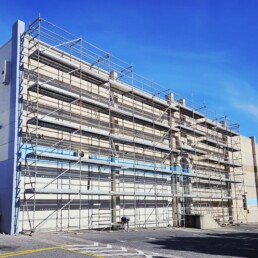
Scaffolding Quotation Checklist - What Should Be Included Before You Sign Off?
Scaffolding Quotation Checklist - What Should Be Included Before You Sign Off?
When you're comparing scaffolding suppliers, price is usually the first thing you see.
It's rarely the most important thing.
A scaffolding quotation is often the clearest indication of how a contractor plans, manages risk, approaches compliance, and delivers on-site performance.
We've seen projects run smoothly because the scope was clearly defined from the start.
And then we've also seen projects hit with delays, variations, safety concerns, and unexpected costs because some pretty important details were left out of the quotation stage.
So whether you're a project manager, quantity surveyor, site manager, engineer, or developer, understanding what should be included in a scaffolding quotation can help you compare suppliers properly and avoid expensive surprises later.
Here's the scaffolding quotation checklist we recommend reviewing before making a decision.
Start With the Scope of Work
The first thing any scaffolding quotation should clearly define is exactly what is being supplied.
That sounds obvious, but vague scopes create problems.
A professional quotation should specify whether the contractor is responsible for design, supply, erection, inspection, maintenance during the hire period, modifications, and dismantling. If any of these elements are excluded, they should be clearly identified.
The quotation should also outline the intended application of the scaffold.
For example:
- Facade access scaffolding
- Formwork support scaffolding
- Loading platforms
- Temporary staircases
- Mobile towers
- Industrial maintenance access
- Specialised access scaffolds
Different applications require different engineering considerations, labour requirements, and compliance measures.
If the scope is unclear, comparisons between suppliers become meaningless.
Scaffold Design and Engineering Requirements
Not every scaffold requires the same level of engineering input.
On complex projects, particularly high-rise developments, industrial facilities, public access areas, or structures exposed to significant wind loading, scaffold design becomes a critical component of the quotation.
A comprehensive quotation should indicate whether scaffold design forms part of the service and whether engineering calculations or drawings will be provided where required.
In Cape Town, this becomes especially important.
Strong coastal winds, exposed building elevations, and complex urban environments often require careful consideration of wind loading, tie patterns, loading requirements, and stability measures.
At Alpine, scaffold design forms an integral part of our planning process. We regularly undertake wind load calculations, scaffold load assessments, and technical design reviews before installation begins because the safest scaffold is the one that has been properly engineered from day one.
Compliance With SANS 10085 and OHSACT
A quotation should provide confidence that the scaffold will be erected and managed in accordance with South African regulations.
SANS 10085 provides the framework for scaffold design, erection, inspection, and use, while the Occupational Health and Safety Act places responsibilities on employers and contractors to provide a safe working environment.
A supplier doesn't need to reproduce legislation inside a quotation.
They should, however, clearly indicate that their systems, procedures, and personnel operate in compliance with applicable regulations.
This becomes particularly important when evaluating multiple quotations.
If one supplier is significantly cheaper than the rest, it's worth understanding whether compliance-related costs have been excluded or overlooked.
Proper compliance requires trained personnel, inspections, supervision, documentation, and quality control. Those elements carry a cost, but they also reduce risk.
Labour, Transport, and Logistics
One of the most common causes of cost disputes is uncertainty around labour and transport.
A good quotation should clarify:
- Delivery and collection arrangements
- Erection and dismantling labour
- Transport costs
- Site access assumptions
- Working hours included
- After-hours or weekend work requirements
Cape Town projects often present logistical challenges that affect scaffold installation.
CBD developments, restricted access sites, live commercial environments, and industrial facilities all require different approaches.
When suppliers understand these constraints upfront, quotations become more accurate and projects run more smoothly.
Hire Period and Commercial Assumptions
Not all scaffolding quotations are structured the same way.
Some may include a fixed hire period. Others may provide monthly hire rates with separate erection and dismantling costs.
The quotation should clearly state:
- The hire duration allowed for
- Extension rates
- Additional hire charges
- Payment terms
- Any assumptions that affect pricing
For project managers and quantity surveyors, these details are essential when budgeting and forecasting costs across the project lifecycle.
The cheapest initial quotation can quickly become the most expensive if extension rates and variations are not understood from the outset.
Inspection and Handover Requirements
Scaffolding is not simply erected and forgotten.
Inspections are a critical part of safe scaffold management.
SANS 10085 requires ongoing inspection and monitoring of scaffolds while in use, including inspections before use and following events that may affect stability or safety.
A professional quotation should indicate what inspection services are included and how scaffold handover will be managed.
You should expect clarity around:
- Initial scaffold handover
- Inspection responsibilities
- Ongoing compliance monitoring
- Record keeping and certification
These processes help protect both the contractor and the client while maintaining a safe working environment on site.
Documentation You Should Expect
Documentation is often overlooked until an audit, safety review, or client inspection takes place.
By then, it's usually too late to discover something is missing.
A professional scaffolding contractor should be able to provide relevant documentation associated with the project and scaffold system.
Depending on the scope and complexity of the project, this may include:
- Scaffold designs and drawings where required
- Inspection records
- Handover documentation
- Competency and training records
- Relevant safety documentation
Well-organised documentation demonstrates professionalism and helps ensure projects remain compliant throughout their duration.
Materials and Scaffold System Specification
Not all scaffolding systems are identical.
The quotation should identify the scaffold system being used and its suitability for the project.
At Alpine, we utilise industry-recognised systems including Kwik-Stage scaffolding, which remains one of South Africa's most widely used access systems, as well as Layher systems for specialised industrial and technical applications.
Understanding the proposed system helps project teams assess factors such as:
- Access requirements
- Loading capacity
- Adaptability
- Installation efficiency
- Suitability for complex structures
For industrial sites, petrochemical facilities, breweries, and maintenance shutdowns, system selection can have a significant impact on project execution.
The Contractor Behind the Quotation
The document itself matters.
The company behind it matters more.
A quotation should give you confidence that the contractor has the experience, technical capability, safety culture, and operational capacity to deliver what has been promised.
When reviewing quotations, consider:
- Relevant project experience
- Technical scaffolding expertise
- Health and safety capability
- Responsiveness during the tender process
- Ability to scale for project requirements
The quotation is often the first indication of how the contractor will manage the project itself.
If communication is unclear before the contract is awarded, it rarely improves afterwards.
Use the Quotation to Compare Value, Not Just Price
The purpose of a scaffolding quotation isn't simply to tell you what the project will cost.
It's to show you what you're actually buying.
The strongest quotations provide transparency around scope, compliance, engineering, inspections, logistics, and commercial assumptions. They allow project teams to make informed decisions and reduce uncertainty before work begins.
When you're reviewing your next scaffolding quotation, ask one simple question:
"Does this document give me confidence that the project will be delivered safely, efficiently, and without unnecessary surprises?"
Contact Us For A Free Quotation (or Any Questions)
Complete the contact form below for any quotes, questions, or enquiries about your project.
Our dedicated team of experts will get back to you promptly.