

Designing Scaffolding That Protects Petrochemical Sites from Fire and Downtime
Designing Scaffolding That Protects Petrochemical Sites from Fire and Downtime
Petrochemical plants are unforgiving environments. Scaffolding that might be sufficient on a housing development or office block cannot be trusted in a refinery surrounded by volatile gases, corrosive vapours, and machinery that never really stops.
Access structures in these facilities must do more than give workers a platform. They need to protect lives, safeguard operations, and keep the clock on schedule during time-critical shutdowns.
For shutdown planners, HSE managers, and industrial engineers, scaffolding is not an afterthought. It is one of the most critical elements of a safe maintenance programme, shaping everything from fire risk to operational continuity.
Alpine Scaffolding has built its petrochemical expertise on that reality, investing in system scaffolding that withstands the unique conditions of high-risk plants.
What Makes Petrochemical Sites So Demanding
Designing scaffolds in petrochemical environments requires an awareness of hazards that go beyond height and stability. Every decision has to account for the plant’s operational and environmental pressures. The main drivers are ignition potential, chemical corrosion, and the need to keep production running even while maintenance takes place.
Imagine scaffolding around a storage tank. There is no luxury of shutting down surrounding pipework or isolating flammable vapours entirely. The scaffold must be engineered to prevent sparks, resist the atmosphere, and give safe access routes without blocking emergency exits or routine operations. Coastal air adds another challenge.
Many of the Western Cape’s industrial plants operate close to the ocean, where salt and moisture accelerate rust. Ordinary scaffolding fatigues quickly in these conditions, putting workers at risk and forcing unnecessary replacements.
The combination of these hazards explains why Alpine relies on Layher galvanised systems as the foundation for petrochemical work.
Why Galvanised Layher Systems Change the Equation
System choice matters as much as design. Alpine’s galvanised Layher scaffolding provides resilience in environments where conventional equipment would become a liability.
Fully galvanised steel resists rust and maintains strength despite constant exposure to corrosive vapours and salt air. The modular rosette design makes it possible to scaffold curved tanks, pipe racks, and vertical vessels with precision. Connections are engineered to lock securely, reducing the number of loose fittings and weak points.
Perhaps most importantly, Layher components minimise spark risk. In a refinery or chemical plant, one spark can trigger catastrophic events. Using equipment designed with that sensitivity in mind is a safeguard that benefits both the workforce and the plant itself.
For site managers and engineers, this means access systems that remain stable, durable, and compliant across the entire shutdown period. For shutdown planners, it means crews work with equipment that erects and dismantles quickly, shaving hours off the schedule without trading away safety.
The Design Process that Builds in Safety
Having the right equipment is only the first step. Petrochemical scaffolds live or die in the design phase. Alpine’s team runs calculations before any gear leaves the yard, modelling the loads and conditions the scaffold will face.
These designs don’t just focus on height and span. They factor in worker flow, emergency egress, and the sequencing of construction so scaffolds can be built around live operations without disrupting production.
The design process typically addresses:
- Load planning that accounts for live, dead, and wind loads on the structure.
- Geometry solutions for tanks, boilers, and vertical vessels where access angles are awkward.
- Emergency evacuation routes that allow workers to get clear without delay.
Each drawing is signed off by competent professionals, ensuring accountability and a record that satisfies both internal audits and external regulators. This eliminates mid-project rework and reduces the chance of compliance disputes later.
Compliance as Standard Practice
Every scaffolding contractor is required to work within the framework of SANS 10085 and the Occupational Health and Safety Act. On paper, these standards define the minimum acceptable level of safety. On petrochemical projects, Alpine treats them as the baseline, not the end goal.
That culture translates into certified inspectors logging daily checks, formal handover certificates before any access is granted, and re-inspections after storms or operational events. Crews are formally appointed and competency-certified for each task, leaving no uncertainty about roles or accountability. Documentation is structured so HSE managers can easily track compliance without scrambling for records during audits.
By embedding compliance into the routine rather than treating it as a box-ticking exercise, Alpine reduces risk for both contractors and clients. Safety is proactive, not reactive.
Speed Without Compromise
Shutdowns are expensive. Every hour of downtime adds pressure to maintenance budgets and production schedules. Scaffolding often sits on the critical path, which means delays in access have a knock-on effect on the entire shutdown programme. Alpine’s approach tackles this by combining engineered systems with crews who specialise in working under tight deadlines.
Layher’s modular system is designed for fast assembly and dismantling. Fewer components mean fewer errors and shorter build times. Alpine crews are trained specifically for industrial shutdowns, where night shifts, tight spaces, and high-risk environments are the norm. Logistics are planned down to the delivery schedule, ensuring materials arrive in sequence and crews can keep moving without standing idle.
The result is access that goes up quickly, stays reliable under demanding conditions, and clears the site just as efficiently. For planners balancing multiple trades in a refinery environment, this reliability removes one of the biggest sources of stress.
Field Experience in the Western Cape
Alpine’s portfolio includes scaffolding for refineries, breweries, and industrial facilities across the Western Cape. These projects have involved wrapping scaffolds around storage tanks, giving safe access to boilers, and building structures through pipe racks without disrupting live operations.
In each case, the principles remain consistent: galvanised systems that resist corrosion, designs that account for emergency scenarios, and inspection routines that satisfy both internal safety teams and external regulators. Clients return because these methods reduce downtime and keep incidents off the record.
Preparing for Your Next Shutdown
Planning access for a petrochemical shutdown is about more than ticking a compliance box. The right scaffold design protects workers, reduces fire risk, and safeguards production. It also shields projects from the costs of rework, regulatory penalties, and reputational damage.
By choosing a partner that invests in system scaffolding, designs structures for the unique challenges of petrochemical environments, and enforces compliance as daily practice, shutdown planners and HSE managers set themselves up for success.
Alpine Scaffolding brings service, agility, and safety to every one of these projects. That commitment is what keeps plants running, schedules intact, and risks under control.
Contact Us For A Free Quotation (or Any Questions)
Complete the contact form below for any quotes, questions, or enquiries about your project.
Our dedicated team of experts will get back to you promptly.

What to Ask Before Hiring a Scaffolding Contractor in Cape Town
What to Ask Before Hiring a Scaffolding Contractor in Cape Town
Most scaffold problems don’t start on site, they start at procurement.
More often than not, it’s caused by a rushed quote, a vague scope, or a contractor that looks fine on paper but can’t deliver when pressure hits.
If you’re responsible for appointing a scaffolding supplier, the questions you ask up front are your best line of defence.
Here’s a clear, practical checklist to help you separate capable contractors from the ones who’ll burn your programme.
1. Are They Compliant with SANS 10085 and OHSACT?
This should be non-negotiable. Any scaffolding supplier operating legally in South Africa needs to follow SANS 10085 for design, erection, and inspection - and fall under OHSACT for health and safety responsibilities.
Ask for:
- Proof of compliance with both
- A copy of their scaffold handover certificate template
- Details on how often they inspect their scaffolds
If they can’t provide that on request, you’re already carrying their risk.
2. Who Signs Off the Scaffold Before Use?
Every scaffold must be inspected and signed off before it’s handed over to the main contractor or any trade. That sign-off must come from a certified, appointed person ie: not just a team member “with experience”.
Make sure your supplier has qualified staff, formal appointment letters, and documented inspection procedures. Alpine provides all of this as standard, and every scaffold is signed off before the job starts.
3. Are Designs Done In-House or Outsourced?
For simple access towers or staircases, standard design might be fine. But for anything beyond that - facades, cantilevers, loading decks, tight urban builds - you want to know who’s actually producing the design.
At Alpine, we handle scaffold design in-house and consult with engineers when required. That means tighter control over site-specific risks, and quicker turnaround when the design needs to change mid-project.
4. Can They Prove Their Track Record?
It’s easy to list project names on a website. But can they walk you through a similar job they’ve completed - successfully, safely, and without delay?
Ask for references that match the type of project you’re running. If it’s a commercial high-rise, ask about facade access. If it’s a coastal site, ask what system they use to handle wind load.
We’ve delivered scaffolding for everything from CBD towers to petrochemical shutdowns - on time and to spec.
5. Who’s Actually Doing the Work?
A scaffolding quote is only as good as the team behind it. You need to know who’s showing up on your site - not just the name on the invoice.
Check:
- Are their crews internal or outsourced?
- Are scaffolders certified and appointed?
- Is there a contracts manager or site lead you can talk to directly?
We field our own teams, and every project has an Alpine site contact. That means faster response, no miscommunication, and no finger-pointing when conditions change.
6. What Does Their Safety File Include?
If you’ve ever had to chase down handover docs or compliance certificates at the 11th hour, you know how painful that scramble is.
Ask what documentation they provide up front. Alpine includes:
- Handover certificates
- Load plans
- Staff competency records
- Daily inspection logs
Everything is filed, signed, and ready for audit if needed.
Scaffolding Isn’t Just About Tubes and Boards
It’s about planning, coordination, compliance, and execution under pressure. If your contractor doesn’t take it seriously, you’ll be left covering for them when things fall behind or go wrong.
Ask the right questions. Look past the day rate. Choose a scaffolding team that makes your job easier, not harder.
If you need answers you can count on – we’re ready to talk.
Contact Us For A Free Quotation (or Any Questions)
Complete the contact form below for any quotes, questions, or enquiries about your project.
Our dedicated team of experts will get back to you promptly.

Scaffolding for Industrial Shutdowns: What You Need to Plan For
Scaffolding for Industrial Shutdowns: What You Need to Plan For
Shutdowns don’t tolerate mistakes. You’ve got a fixed window, a full site of contractors, and a list of tasks that need to be completed in hours, not weeks.
If scaffolding holds up the job, the whole programme suffers. And in a petrochemical or manufacturing environment, delays don’t just cost money, they introduce risk.
Here’s what you need to know when planning scaffolding for high-pressure industrial shutdowns, and how Alpine works to keep things moving without compromise.
Scaffolding Is a Critical Path Item
On shutdowns, scaffolding isn’t background infrastructure. It’s part of the programme.
Access platforms for insulation, inspection, welding, NDT and coatings all need to be up, checked, and ready, before the other teams arrive. If access is late or wrong, the chain reaction starts: teams stand down, permits get bumped, and everything slips.
That’s why we scope shutdown access weeks in advance, working off detailed site walkdowns, existing drawings, and critical path input from your team. No guesswork. No surprises.
Time Windows Are Tight. Planning Has to Be Tighter.
In shutdown environments, everything runs on tight hours, not flexible days. Permits, isolations, crane lifts - every piece is scheduled to the minute. Scaffold work has to happen quickly and cleanly, without rework or delays.
We approach shutdowns with:
- Preloaded designs
- Staged equipment
- On-site leads who work around-the-clock schedules if needed
The crew shows up with a plan, not a question. And if something changes on the ground, there’s someone there who can adapt fast, without going back to the drawing board.
Not All Systems Are Equal
Industrial sites aren’t flat slabs. You’re building inside tanks, around live lines, under overheads, and next to heat or chemical hazards. Your scaffold system has to match those conditions.
We use the Layher modular system because they can be configured for tight spaces, curved surfaces, and non-standard geometry.
The galvanised finish also holds up better in high-corrosion areas like coastal plants or chemical environments.
Layher is a safer, faster way to build access that fits the site instead of fighting it.
Safety Isn’t Optional
When you’re working at height, under pressure, and often around live equipment, safety isn’t just policy, it’s survival.
Alpine’s crews are certified, experienced, and briefed daily. Every scaffold is inspected before use, with signed handovers and daily logs that meet OHSACT and SANS 10085 requirements.
On shutdowns, we often provide dedicated inspection and site compliance support to help your H&S team stay on top of multiple work fronts.
No shortcuts. No excuses.
You Need a Partner Who Knows the Environment
We’ve worked shutdowns across the Western Cape - from refineries and power stations to industrial manufacturers and coastal plants. We know what goes wrong, how the pressure stacks up, and what it takes to deliver scaffold access that won’t hold up the job.
If you’re planning a shutdown, we’re ready to help you scope the access and lock in the timelines. before the pressure starts.
When hours count, Alpine delivers.
Contact Us For A Free Quotation (or Any Questions)
Complete the contact form below for any quotes, questions, or enquiries about your project.
Our dedicated team of experts will get back to you promptly.

Formwork Safety Protocols That Actually Work
Formwork Safety Protocols That Actually Work
Formwork doesn't get much attention when it's holding - but the second it fails, it's everyone’s problem. Injuries, damage, delays, investigations. All from something that should have been caught early.
When you're dealing with wet concrete and time-sensitive pours, the margin for error disappears fast. And when public footpaths, basements, or adjoining properties are in the mix, the risk profile gets even tighter.
Here’s how we keep our formwork operations safe, stable, and compliant from start to strip.
Load Calculations Aren’t Just for Engineers
The first question on any formwork job is: can it take the load? And we’re not just talking about the wet concrete.
Formwork needs to handle:
- The hydrostatic pressure of the concrete pour
- Vibration from mechanical pokers
- Live loads from workers or equipment
- Unexpected shifts in site conditions
At Alpine, we don’t guess. We model the load based on pour rate, wall height, and concrete mix. On jobs where design tolerance is tight, we bring in engineer-reviewed drawings to confirm bearing capacity across slabs, props, shores, and bracing.
Because once the pour starts, you don’t get a second chance to adjust the plan.
Props Are Only as Safe as Their Setup
A single over-extended prop or poorly seated base plate can compromise the whole system. That’s why our crews follow a fixed protocol for checking:
- Prop type and rating (we don’t mix incompatible systems)
- Vertical alignment and extension lock-offs
- Timber sole plates on soft ground
- Head bracing and tie-back where required
Each level is checked during setup, after loading, and again before stripping. It sounds basic, but it’s where a lot of avoidable failures start.
Working Near the Public? Non-Negotiable Barriers.
Formwork near public walkways, driveways, or active buildings demands another level of care.
Even a small material drop or blowout can result in major consequences.
We install catch fans, physical barricades, debris netting, and warning signage - before the pour.
Our formwork also includes containment where needed, using additional ply sheeting or spill guards to prevent concrete spillage outside the pour zone.
This is standard on our builds. Not an optional extra.
Communication During the Pour
Once the concrete starts flowing, the clock’s running, and everyone needs to be aligned. Miscommunication between the pour crew, the formwork lead, and site management is often where things start to unravel.
On larger pours, we coordinate the formwork operation with a designated lead from our team, someone responsible for managing pressure zones, pour sequence, and site safety in real time.
It’s a small operational tweak that removes the guesswork when things get time-sensitive.
Strip With Care, Not Speed
Stripping early is one of the most common safety shortcuts in formwork. When schedules are tight, teams start dismantling too soon, before full strength has developed or without checking the design’s required curing period.
Our approach is simple: no strip happens unless a competent person has checked the structural strength gain, ambient temperature, and pour timing.
And on multi-level slabs, nothing comes down until the loading above is properly transferred or re-shored.
It’s slow where it needs to be. But it keeps your structure (and your crew) intact.
A Formwork Partner That Plans for the Risk
We’ve worked on everything from small slab decks to high-rise cores, public walkway underslabs, and shuttered walls on high-traffic commercial builds.
The common thread? Planning the risk out early, so you’re not reacting mid-pour.
If your next project involves formwork in a complex or high-pressure setting, it’s worth bringing in a team that builds safety into the method from day one.
Formwork should never be the weak point. With Alpine, it isn’t.
Contact Us For A Free Quotation (or Any Questions)
Complete the contact form below for any quotes, questions, or enquiries about your project.
Our dedicated team of experts will get back to you promptly.

The Real Cost of Cheap Scaffolding: A Site Manager’s Perspective
The Real Cost of Cheap Scaffolding: A Site Manager’s Perspective
On paper, it looked like a win. The quote came in lower than expected, the lead time was short, and the supplier said all the right things.
But two weeks in, the cracks were obvious (literally).
Scaffolding is one of those trades that doesn’t always shout for attention. Until something goes wrong.
Then suddenly, your programme, your safety file, and your site credibility are all in the firing line.
Here’s what the “cheap” option really costs once the job starts.
The Setup That Took Four Days Instead of Two
We’ve seen it too often. A scaffold team shows up late, without drawings, and spends the first day figuring things out.
Boards don’t fit, ties are missing, and the whole structure needs to be pulled apart halfway through the build.
Meanwhile, trades are standing by, losing hours (and patience).
We’ve been called in to replace setups that failed inspection the day after they were erected. Time that could’ve been spent progressing the build ends up going toward rework, admin, and apology emails to the client.
Non-Compliance That Creates Risk for Everyone
If scaffolding doesn’t comply with SANS 10085, it can’t legally be used on a South African construction site. That includes:
- No handover certificate
- No inspection log
- No competent person appointed
But we still see setups like this, especially on tight-margin builds where price wins the tender.
Here’s the problem: if something goes wrong, it’s your site in the spotlight. Your H&S file. Your incident report. Cheap scaffolding might save R5k on the quote, but it can cost you real money (and reputation) if it triggers a stoppage or injury.
Material That Can’t Handle the Job
On one housing project, the builder brought in a low-cost scaffold supplier. The components looked rough, twisted standards, rusted base jacks, and planks that flexed underfoot.
The crew said they’d “make a plan.”
When the engineer walked the site two days later, the entire façade had to be taken down and rebuilt to spec.
You can’t afford scaffolding that flexes, slips, or settles under load. Alpine uses quality system gear that’s built to handle real site conditions, not cut corners.
No One to Talk To When It Counts
When scaffolding is holding up your next slab or your façade install, you can’t afford a team that doesn’t answer the phone.
We’ve had contractors call us mid-project because their scaffold supplier disappeared after install - no follow-up, no inspection and no updates.
Now they’re chasing someone to re-certify the structure or make urgent changes, and the programme’s already sliding.
A proper scaffold contractor gives you a site contact, daily check-ins, and clear communication. That’s the minimum standard. It’s also the difference between momentum and delay.
When It’s Done Right, You Don’t Have to Think About It
That’s the goal. Scaffold arrives on time, goes up cleanly, passes inspection, and stays in service without needing constant intervention.
At Alpine, we build access that works from day one. Our crews are trained, our gear is systemised, and our work is signed off properly, so you can get on with the job without scaffolding becoming a daily headache.
Cheap scaffolding is never cheap for long.
If your site can’t afford surprises, don’t risk it. Bring in a team that gets it right first time.
Contact Us For A Free Quotation (or Any Questions)
Complete the contact form below for any quotes, questions, or enquiries about your project.
Our dedicated team of experts will get back to you promptly.

Designing Scaffold Solutions for Cape Town’s Coastal Conditions
Designing Scaffold Solutions for Cape Town’s Coastal Conditions
Cape Town’s coastline is hard on temporary works. Wind exposure, uneven terrain, and salt-laden air can all turn a standard scaffold job into a high-risk operation - especially on builds near the sea.
Designing safe, stable scaffolding in these conditions takes more than just system gear. It takes foresight, load calculation, and a team that understands what the coastal environment does to structure over time.
Here’s how we build scaffold systems that stand up to the Cape’s toughest conditions.
Wind Loads Are Real - and Dangerous
One of the biggest risks on exposed coastal sites is wind. Even when the scaffold looks secure from the ground, high wind speeds can introduce uplift, lateral sway, or sheet movement that destabilises the structure.
SANS 10085 requires that scaffold structures account for local wind loads during design. We take that further by:
- Factoring in site-specific wind exposure based on elevation and orientation
- Limiting the use of shade netting or sheeting where uplift risk is high
- Increasing tie frequency and anchoring points on tall or freestanding builds
- Using wind-rated bracing layouts, especially near beaches or open bays
We’ve delivered façade access on buildings just metres from the surf - and kept them in service through seasonal weather without incident.
Corrosion Can Undermine Structural Integrity
Salt air eats metal. And over time, it compromises the strength of scaffold components - especially if the system hasn’t been maintained or inspected properly.
That’s why galvanised system scaffolding is a good choice for exposed or coastal jobs. Unlike painted or mixed-material setups, galvanised components resist surface corrosion and protect the structural core of the material.
We also inspect and cycle out gear that shows signs of pitting or structural wear - so what goes up on your site isn’t already halfway to failure.
Uneven Terrain Needs More Than a Level
Coastal builds don’t always come with clean concrete slabs. Retaining walls, sloped driveways, landscaping zones and rocky foundations mean scaffold needs to be carefully planned, especially when weight distribution or public interface is a factor.
Our teams:
- Use base jacks, timber sole plates, and adjustable supports to create stable bearing surfaces
- Design scaffold layouts to reduce over-extensions or unbalanced loads
- Deploy ladder beams to span over obstructions like planters or retaining structures
- Pre-plan anchor points to avoid penetrations in waterproofed or finished surfaces
That attention to base setup matters just as much as the design above ground.
Scaffold Design Should Match Site Conditions - Not Fight Them
We don’t force standard layouts onto complex sites. Every scaffold Alpine erects on a coastal build is designed for that location’s conditions.
That means:
- Load plans based on actual elevation and wind data
- Structural tie-ins that won’t damage façade finishes
- Staged delivery and erection to match build sequencing
- Inspection schedules that account for environmental exposure
If your scaffold contractor isn’t building with the coast in mind, they’re missing the point, and putting the rest of your programme at risk.
Cape Town’s Coastline Is No Place for Generic Scaffolding
We’ve worked across Clifton, Sea Point, Muizenberg, Blouberg, and the deep south. Our teams know what this environment does to equipment, structures, and timelines. And our solutions are built to work with it - not against it.
If your next project sits near the ocean, let’s talk.
With Alpine, you get scaffold that’s engineered for the view - and everything that comes with it.
Contact Us For A Free Quotation (or Any Questions)
Complete the contact form below for any quotes, questions, or enquiries about your project.
Our dedicated team of experts will get back to you promptly.

Temporary Works That Keep Your Site Moving
Temporary Works That Keep Your Site Moving
Access isn’t just a safety issue - it’s a logistics issue. If your workers, materials, or subcontractors can’t move freely across the site, your programme stalls.
That’s where temporary works come in. Done right, they remove bottlenecks, improve safety, and keep pressure off your critical path.
At Alpine, we build temporary structures that don’t just meet compliance, they actually make your site easier to run.
Public Gantries That Keep the Street Open
On urban sites, you’re often building right up against the boundary. That means scaffolding, hoisting, and façade work happen directly above public footpaths or traffic lanes.
Our temporary public gantries protect the zone below, without blocking access.
- Designed to carry overhead scaffold loads and sheeting
- Allows pedestrian or vehicle access to continue safely
- Built to spec and signed off with structural documentation
- Integrated into your safety file and public protection plan
We’ve installed gantries on CBD developments where foot traffic couldn’t stop -and handed over without disrupting city operations.
Loading Decks That Take Pressure Off the Crane
Waiting for crane time to offload materials is a classic site delay. When trades are working across multiple floors, a single point of delivery doesn’t cut it.
Alpine supplies and erects scaffold-supported loading platforms that sit flush with slab levels - giving you dedicated drop zones without tying up plant or hoists.
- Suitable for formwork, brick packs, glazing, and finishes
- Fully designed for load capacity and tie-in
- Can be relocated as floors progress
- Speeds up vertical distribution across levels
No more queueing for crane time. No more moving stock twice.
Temporary Staircases That Actually Work
Ladders might tick the compliance box, but they don’t solve real access problems, especially on multi-level builds with high foot traffic or material movement.
Our temporary stair towers provide:
- Fast, safe vertical movement
- Compliance with SANS 10085 and site H&S protocols
- Modular configurations to suit different slab heights
- Solid footing and handrails for consistent use
These systems are ideal for apartment blocks, hotels, office builds - any site where constant slab-to-slab movement is required by multiple teams.
Integrated Design and Clean Handovers
Every temporary structure we build is:
- Designed for its exact location and use
- Built by certified teams
- Inspected and signed off with full documentation
That means no arguments at audit time, no mid-build adjustments, and no grey areas when H&S walks the site.
We work with your engineer and site agent to make sure temporary works fit the build sequence - not fight it.
Build Momentum - Not Workarounds
We’ve supported commercial and residential sites across Cape Town with gantries, decks, stairs, and scaffold systems that keep things moving.
When you work with us, you don’t get makeshift. You get engineered access that speeds up the programme and protects the people working under pressure.
Let’s build the temporary works that make your permanent structure easier to deliver.
Contact Us For A Free Quotation (or Any Questions)
Complete the contact form below for any quotes, questions, or enquiries about your project.
Our dedicated team of experts will get back to you promptly.

Access Challenges on Complex Sites? These Scaffold Designs Solve Them
Access Challenges on Complex Sites? These Scaffold Designs Solve Them
Not every site plays by the book. Sometimes you're building against a live roadway, up against a coastal retaining wall, or working inside a constrained plant with zero margin for error. Access becomes becomes an engineering problem.
When space, height, or operational constraints complicate things, generic scaffolding won’t cut it. You need systems and methods that adapt to the environment without compromising on safety or stability.
Here’s a breakdown of scaffold solutions that are built to handle the tough stuff.
Ladder Beams: Spanning Where You Can’t Build
Ladder beams are ideal for bridging over obstacles - service pipes, walkways, entry points, signage, or lower roof lines. Instead of building straight to the ground, the structure spans unsupported space while maintaining load capacity.
On sites where obstruction-free access is non-negotiable - like hospitals, public buildings, or active production lines - ladder beams create safe, elevated platforms without disrupting what’s below. They're engineered to handle concentrated loads and often work hand-in-hand with structural tie-ins for additional support.
We’ve used this approach to span over glass facades, heavy equipment bays, and even river channels where foundation access wasn’t possible.
Stair Towers - Safe Vertical Movement at Speed
When you’re running a multi-storey build or managing heavy foot traffic between slab levels, ladders become a liability. Stair towers offer a safer, faster way to move workers, tools, and materials up and down - and they're fully compliant with SANS 10085 access requirements.
Modular stair towers can be freestanding or built into larger scaffolding systems. They can also be tailored to suit tight footprints or odd elevations, allowing clear vertical movement without clashing with other trades or structural elements.
On phased builds or where public access must be managed safely - such as retail centres or institutional refurbishments - stair towers become essential infrastructure.
Layher Systems: Precision for High-Risk Environments
Layher is the gold standard for complex access environments. This German-engineered modular system uses rosettes to create virtually any configuration - perfect for irregular structures, curved surfaces, or areas with difficult geometries.
Its galvanised finish makes it rust-resistant, which is critical for coastal or petrochemical work. More importantly, the precision and flexibility of Layher allow for engineered solutions in places where standard modular scaffold just won’t work.
We deploy Layher for jobs like:
• Boiler and tank access on industrial shutdowns
• Scaffolds built over water or uneven terrain
• Heritage façades with preservation constraints
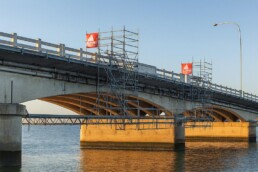
• Multi-directional, wraparound platforms on bridges and overpasses
These are jobs where traditional systems would slow you down - or introduce unnecessary risk.
Built to Fit the Site, Not the Other Way Around
Every complex site has its own logic. Access needs to follow that logic - working with existing structures, not fighting them. That’s where scaffold design moves from generic to site-specific. Load capacity, wind exposure, tie-in options, traffic management, staging requirements - these all factor into the solution.
We don’t push pre-set systems. We design scaffold configurations around your access plan, site hazards, and construction sequence. That means fewer clashes with other contractors, reduced modification mid-build, and faster turnaround from installation to inspection sign-off.
Get Access Solutions That Match the Complexity of Your Site
If your site involves height, heritage, tight spaces, or 24/7 operations, don’t rely on standard scaffolding to meet non-standard needs. You need a partner who understands technical access - and delivers engineered solutions that are built for your environment.
Talk to us. We bring the gear, the planning, and the expertise to solve access problems others avoid.
Contact Us For A Free Quotation (or Any Questions)
Complete the contact form below for any quotes, questions, or enquiries about your project.
Our dedicated team of experts will get back to you promptly.

Scaffold Delays Are Costing You - Here’s How to Avoid Them
Scaffold Delays Are Costing You - Here’s How to Avoid Them
When scaffolding doesn’t arrive on time - or gets erected incorrectly - you lose both hours and momentum. Trades are pushed back. Deadlines start slipping. And your client starts asking uncomfortable questions about why the job has stalled before the real work even begins.
Delays like these aren’t are both frustrating and expensive. And in most cases, completely avoidable.
It Starts with Proper Scoping
Scaffold delays often begin before anyone sets foot on site. If the scope hasn’t been nailed down, your supplier is likely quoting on assumptions - and assumptions don’t hold up when real-world site conditions kick in.
We don’t quote blind. Before we submit a proposal, we make sure we’ve reviewed drawings, walked the site where possible, and understood what trades need access when. That level of planning upfront avoids confusion later - especially when your site gets busy and access becomes a moving target.
A Fast Team Isn’t a Rushed Team
Moving quickly doesn't mean cutting corners. There’s a difference between a team that works efficiently and one that guesses their way through a build. The first gets your scaffold up on time. The second leaves you with stop-start inspections, missing compliance documents, or unsafe structures that need to be redone mid-project.
We work off engineered drawings and signed load plans. Our crews are coordinated and experienced.
So when we show up, we don’t waste time figuring it out on the fly. The scaffold goes up properly, first time.
Poor Logistics Will Kill Your Timeline
Sometimes it’s not the labour that’s late - it’s the truck. Or the wrong materials. Or a delivery that arrives outside the site’s access window.
Our depot in Beaconvale gives us fast access to Cape Town’s key routes. We handle our own loading and transport in-house, so there’s no third-party lag. Materials arrive sequenced, checked, and ready to build.
That kind of coordination might sound simple - but it’s often where scaffold jobs fall apart.
You Shouldn’t Be Chasing Updates
If you're calling your scaffold contractor more than your bricklayers, something’s off.
Communication is part of the service. You should know when the team is arriving, what’s being built, and when the scaffold will be ready for use - without chasing anyone down. On our projects, our site leads stay in contact with your foreman or site agent. If something changes, they know about it.
We don’t wait for problems to escalate before we react.
You’re Not Paying for Guesswork
Every hour spent waiting for scaffolding is an hour your team can’t bill. Multiply that by multiple delays across a project and the cost adds up quickly. Worse still, poor scaffolding can impact other trades, create safety risks, or result in compliance issues that cause even longer knock-on effects.
Scaffolding is a critical path item. Treating it as anything less is a mistake.
Contact Us For A Free Quotation (or Any Questions)
Complete the contact form below for any quotes, questions, or enquiries about your project.
Our dedicated team of experts will get back to you promptly.

Why SANS 10085 Compliance Should Be Non-Negotiable on Your Site
Why SANS 10085 Compliance Should Be Non-Negotiable on Your Site
When scaffolding goes up on site, it becomes part of the daily workflow. People walk across it, work from it, trust it to hold steady under load. If that structure hasn’t been designed, erected, and signed off properly, it becomes a weak link in your entire operation - one that affects safety, timelines, and liability in ways that aren't always obvious until something goes wrong.
SANS 10085 lays out the national standard for scaffolding in South Africa. It's detailed, technical, and legally recognised. For site managers and safety officers, understanding how this standard applies in practice is critical. It’s what auditors refer to during inspections and what insurers will ask about if there’s ever an incident.
What the Standard Actually Covers
SANS 10085 spells out the responsibilities of everyone involved in scaffolding - engineers, erection teams, supervisors, inspectors. It defines what’s considered a safe scaffold structure, how it should be assembled, what inspections are required, and who is qualified to do the work.
Key requirements include structural load calculations, appropriate bracing and tying, regular documented inspections, and formal handovers by a certified inspector. It also requires that scaffolding be handled by trained personnel with recognised qualifications. This isn't an informal guideline. It's a formal safety benchmark tied to occupational health legislation under OHSACT.
Safety Begins in the Design Phase
A compliant scaffold starts long before the first board is laid. Site-specific designs must be produced by a competent person, with proper wind and live load calculations factored in. For complex builds - like those on uneven terrain or at height - designs must also consider things like uplift risk and dynamic loads caused by equipment or worker movement.
At Alpine, our process begins with these calculations. Our team submits formal drawings and engineer sign-offs before any equipment is dispatched to site. It means fewer last-minute changes, fewer clashes with other contractors, and zero guesswork once the scaffold is going up.
Inspection Is a Daily Responsibility
SANS 10085 mandates that scaffolds be checked before every shift, after any significant weather, and whenever changes are made to the structure. It also requires a formal inspection at least once a week by a competent inspector. These checks must be logged and stored as part of the project’s safety file.
On a busy site, these inspections are easy to neglect. But skipping even one of them opens the door to avoidable incidents. We include daily checks as part of our service, with formal documentation that’s ready for internal audits or external review. That consistency creates a safer working environment and removes ambiguity about who is responsible for scaffold integrity.
Compliance Prevents Project Disruption
A scaffold that fails inspection can shut down a section of your site immediately. If it's found to be non-compliant during an audit, the entire structure may need to be reworked. That creates downtime, delays your programme, and eats into budget you didn’t plan to spend twice.
By starting with a properly engineered system, you reduce the chances of mid-project disruptions. Our teams erect scaffolding to spec, following a checklist that aligns with both SANS 10085 and the site’s method statement. When structures are signed off from day one, they stay in service without needing reactive fixes down the line.
Documentation That Covers You
If a worker is injured or a scaffold component fails, the investigation will trace back through the paperwork. Every site manager knows how painful it is to scramble for missing inspection logs or competency certificates under pressure. That risk is avoidable if the documentation is built into the process from the start.
Our projects come with a full trail: engineer-signed drawings, scaffold handover certificates, inspection records, and team competencies. This protects your site from both a safety and legal standpoint, and it simplifies reporting to your client, your H&S auditor, or the Department of Labour if needed.
Make Compliance Part of Your Project Culture
SANS 10085 sets a clear standard for scaffolding in South Africa. Following it ensures you maintain control over your site, avoiding preventable disruptions, and upholding your responsibilities as a professional.
When scaffolding is installed and inspected correctly, it becomes one less thing you have to think about. We work within these standards by default. It’s how we reduce risk, protect people, and help you maintain momentum from day one to final handover.
Contact Us For A Free Quotation (or Any Questions)
Complete the contact form below for any quotes, questions, or enquiries about your project.
Our dedicated team of experts will get back to you promptly.